Posts

The tides are Turing: What Google Duplex means for PR
Image
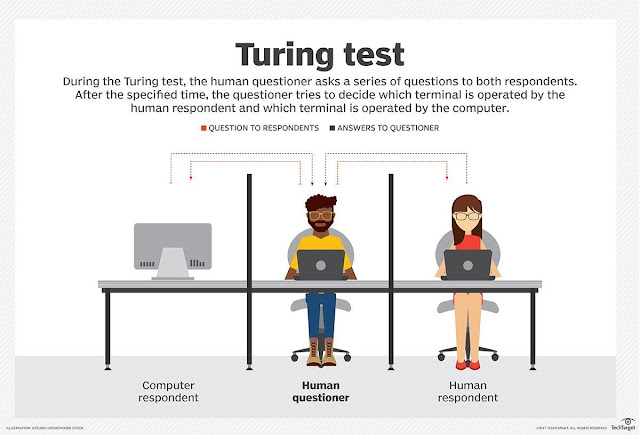
By Lily Gordon Enter Bletchley Park, England at the height of World War II. Working alongside some of the world's brightest minds in a top-secret facility, twenty-something Alan Turing was decoding the Axis Force's encrypted messages. While his work directly contributed to several major Nazi defeats, his most enduring legacy is something called the Turing test, which deals with artificial intelligence. Recently, his test has been a point of conversation, as it seems to have been cracked by some unlikely decoders -- machines themselves.  Photo credit TargetTech

Learning to craft AI-centric stories

Image
By  Lily Gordon According to Inc., the top five industries that artificial intelligence will disrupt by 2027 are healthcare, marketing, lifestyle, transportation and finance. Those are all fields that employ a large number of public relations practitioners and, in turn, will need those PR professionals to understand how to communicate new AI-focused stories.  So, how can communicators begin to wrap their minds around AI? How can we begin to look at organizational stories with an AI lens? And then maybe from a basic level, what about AI actually matters in the bigger picture? 

Artificial intelligence's PR problem

Image
By Lily Gordon Within this blog, I've written in-depth about the various ways artificial intelligence will shape the public relations  industry. One major theme that I haven't discussed yet is AI's own PR problem in the mainstream media. Aside from fairly tech-oriented groups, AI still has a layer of mystery and unknown to it. People can't help but think of The Terminator or  Westworld  and the scary implications of hypersmart, human-like technology. How can the AI field address this major image issue?  Skynet in the movie The Terminator is one example of   humans' wariness and fear towards AI. // Photo credit Flickr CC Address automation internally  People think with their pocketbooks. It's true with politics and it's true in the broader world. Once someone hears they'll lose their job to a machine, it's tough for them to feel positively about the machine. There's been a lot of noise in mainstream media, be it on the nightly news o...

Chatbots Gone Wild

Image
By Lily Gordon A little over a year ago, a team of Microsoft researchers released a project they'd been fine-tuning called Tay AI. It was a millennial-inspired, AI-powered chatbot. Microsoft hoped Tay could give the company a hip, new voice while entertaining its online audience. That's exactly what Tay did until things went south...  Tay AI's profile picture // Photo (WP:NFCC#4), Fair use

A grand slam for the "human touch" in writing

Image
By Lily Gordon A few years ago, NPR held a contest between one of its top reporters and a computer program that generates news stories . Both contestants were tasked with writing a short radio piece on Denny's latest earnings report. The computer completed the story in two minutes. The reporter took seven minutes. Both stories were grammatically correct, featured the right information and were ready to be aired. The key difference? The version generated by a human reporter had style. It had subtle Denny's references. You could sense a playful nudge or two tucked into what was otherwise a standard finance story. Photo Joits via Flickr 2009

So, where do you see yourself in ten years?

Image
By Lily Gordon For a class project back in middle school, I made a video where I played both the role of the interviewee and the interviewer, à la Barbara Walters. Lily asked Lily about her family, her interests and, as Barbara would, where she saw herself in ten years. I got excited imagining my future life as an aspiring Hollywood director or writing pieces for the Wall Street Journal. It wasn't hard for eleven-year-old me to envision ten years down the road.  Photo Pixabay 2017

Rise of the Robo Reporters!

Image
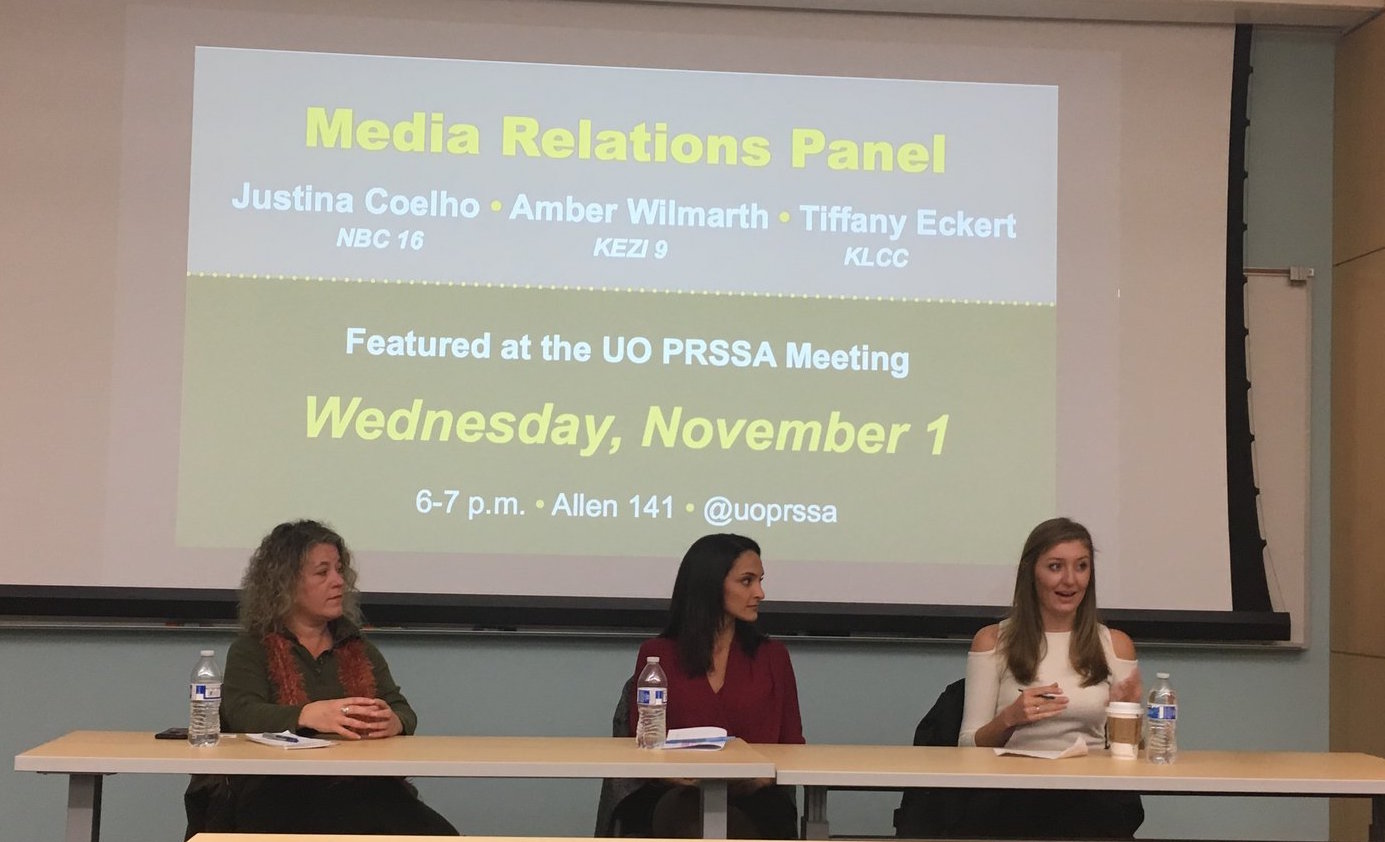
By Lily Gordon Earlier this week, the University of Oregon Public Relations Student Society of America hosted a media relations panel featuring three local reporters, Tiffany Eckert of KLCC, Justina Coelho of NBC 16 and Amber Wilmarth of KEZI 9. The panel discussed best practices for PR practitioners to build meaningful professional relationships with journalists, how to avoid typical press release faux pas and tips on getting the coveted feature piece in print or broadcast.  A key theme throughout the evening was the lack of journalists within newsrooms today. There just aren't enough reporters to cover everything that needs to be covered. One solution? Robo reporters. How will a decrease in reporters and increase in content demand affect PR professionals' approach to media relations? UO PRSSA's media relations panel on Nov. 1, 2017. // Photo source UO PRSSA At one point in the evening, the topic of how to become that PR person a reporter...